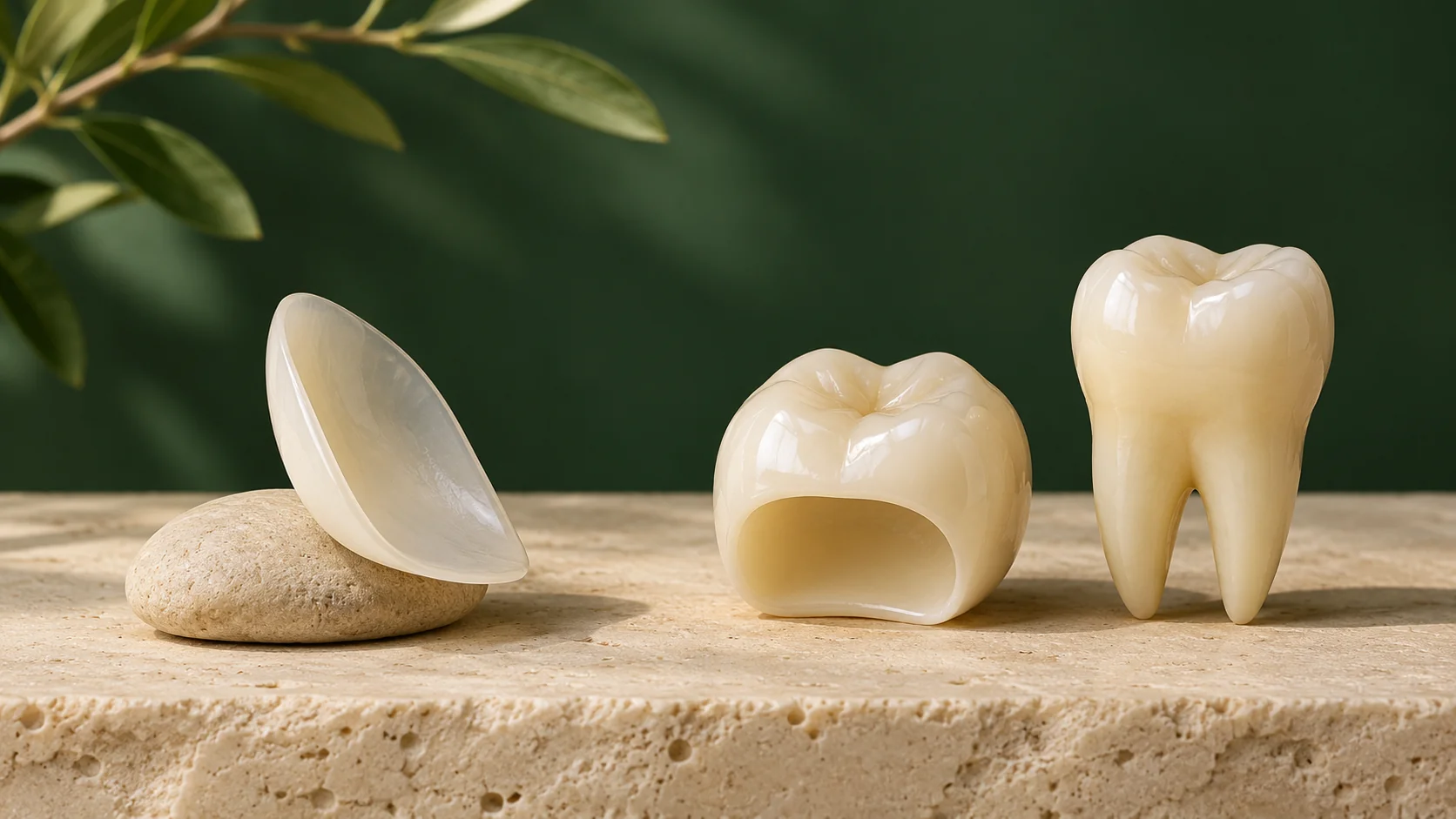
A veneer generally covers the front of a tooth; a crown covers the prepared tooth more extensively. They are not interchangeable names for the same cosmetic treatment. Before agreeing to a smile plan, ask exactly which restoration is proposed for each tooth and why that amount of treatment is needed.
The name of the material does not tell you the treatment
Terms such as porcelain, ceramic and zirconia describe materials. Veneer and crown describe different forms of restoration. A quotation that only says “zirconia teeth” or “smile makeover” does not explain how much natural tooth will be prepared.
Request a tooth-by-tooth plan that identifies veneers, crowns, fillings and any other proposed treatment separately. The same smile can require different approaches for different teeth; a uniform package is not a diagnosis.
When might a veneer be considered?
A veneer may be considered for a suitable tooth when the main concern is visible shape, colour or a limited defect. The amount of remaining enamel, bite and gum health matter. Tooth decay and active gum problems should be addressed before cosmetic work.
A veneer is not a way to avoid diagnosing a damaged tooth. No-preparation or minimal-preparation designs are options only for selected situations. Ask how the proposed restoration will affect thickness, bite and cleaning rather than assuming “no-prep” is suitable for everyone.
When might a crown be considered?
A tooth with significant structural damage, a large restoration or certain fractures may need a different form of protection. A crown can be one option, but the dentist should explain whether a filling, an onlay or another approach could retain more tooth structure.
A crown usually involves preparation around more of the tooth than a veneer. Once natural tooth tissue has been removed, it does not grow back. The decision should therefore be based on the condition and needs of the tooth, not solely the desired shade.
Five questions before approving a smile plan
- Which teeth need treatment, and what problem are we solving on each one?
- Could whitening, orthodontics, bonding or a smaller restoration address my concern?
- How much preparation is expected, and what happens if the findings change during treatment?
- Can we discuss the proposed shape, shade and bite before the definitive restorations are made?
- What are the arrangements for adjustments, repairs, replacement and follow-up after I return home?
Compare cost and future care fairly
Compare plans with the same treatment scope. A lower per-tooth figure may cover a different restoration or omit temporary work, gum treatment or follow-up. Ask for the material, laboratory work, tooth count and included appointments in writing.
Both veneers and crowns can need repair or replacement. Daily cleaning, regular checks and management of grinding remain relevant. Tell the dentist about changes in bite, persistent sensitivity or a loose restoration rather than trying to adjust it yourself.
Discussing options in Antalya
For a consultation at Line Dental Clinic in Muratpaşa, explain what you would like to change and what you want to preserve. Bring previous records if available. Photos are useful for an initial conversation, but the final plan requires a clinical assessment.
Explore veneer treatment in Antalya, what affects veneer prices and crowns and bridges.
Quick answers
Are crowns sometimes called veneers?
Marketing language can be unclear. Ask whether the proposed restoration covers only the front or surrounds the tooth, and have this written into the plan.
Can a healthy tooth always have a no-prep veneer?
No. Tooth position, available space, colour and bite affect suitability.
Does a cosmetic plan always require many teeth?
No. The number and type of restorations should follow the examination and your goals.
Get a personalised treatment assessment
This article provides general information, not an individual diagnosis. Suitability, risks and the final plan require a dental examination.
Get a quote