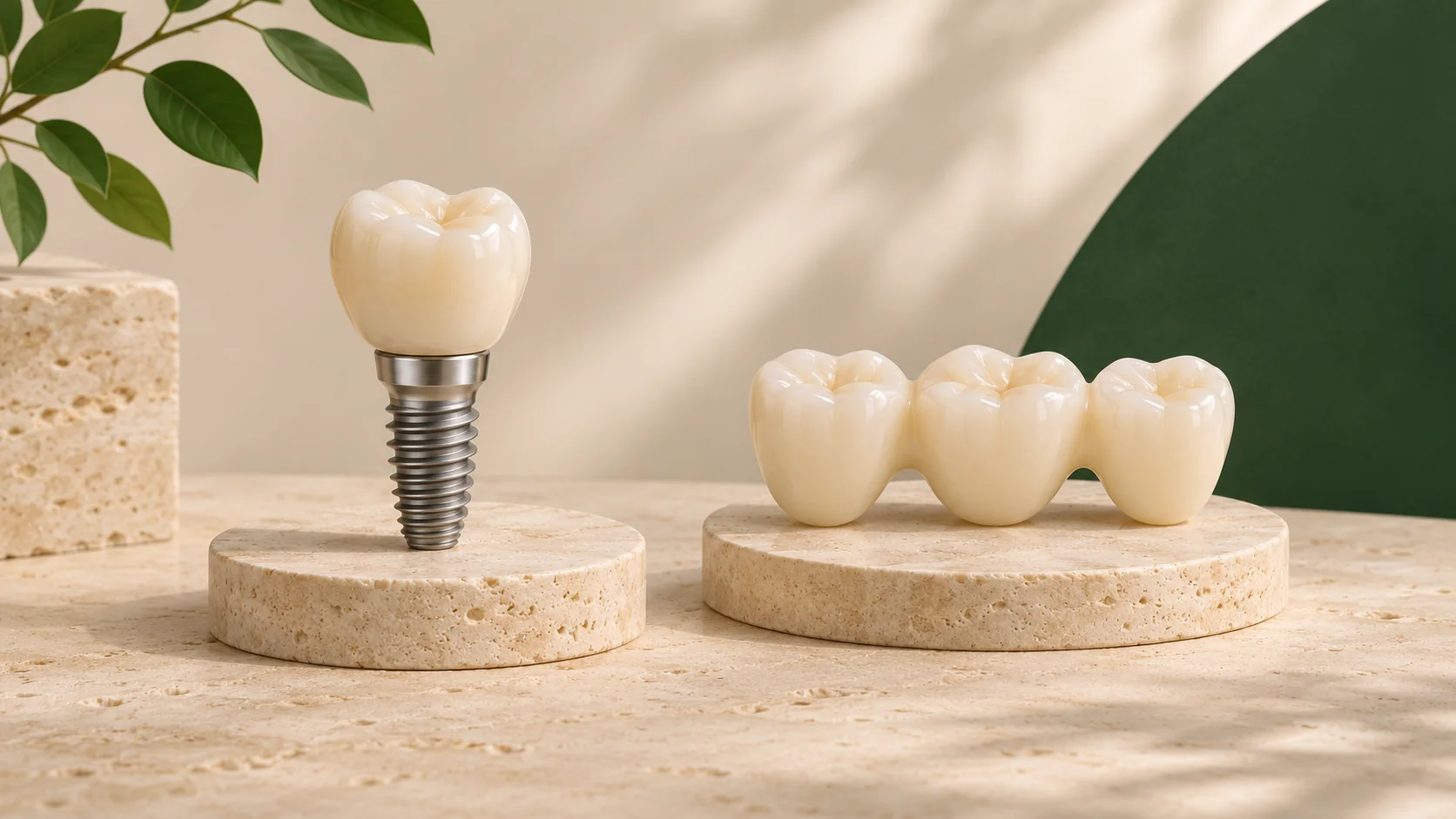
A dental implant and a dental bridge can both replace a missing tooth, but they use different support. An implant is anchored in the jawbone; a conventional bridge relies on neighbouring teeth. The decision depends on the condition of those teeth, the available bone, your bite and your ability to maintain the restoration—not simply which option is advertised as newer.
Start with the teeth beside the gap
Ask the dentist to assess each neighbouring tooth separately. If they are healthy and largely untouched, preserving their structure matters. A conventional tooth-supported bridge generally requires preparation of the supporting teeth. If those teeth already have large restorations or need crowns, the comparison may be different.
An adhesive bridge is another option in selected cases. It is not the same as a conventional bridge and may involve different preparation and retention. A removable replacement, or monitoring a space when clinically appropriate, should also be discussed.
What changes with an implant?
A single implant supports a crown without using the adjacent teeth as bridge supports. It does involve surgery and assessment of bone, gum health and nearby anatomical structures. An implant is not automatically suitable just because a tooth is missing. Smoking, previous gum disease, medical history and medicines should be discussed before a plan is agreed.
Ask whether the proposal includes an implant, the connecting abutment and the final crown. These are different components. If bone grafting is proposed, ask why it is needed and how it changes the sequence.
Compare the whole treatment, not just the first appointment
- Preparation: which natural teeth will be altered, and why?
- Stages: which visits are for surgery, healing checks, impressions and the final restoration?
- Temporary tooth: what will fill the gap while treatment is incomplete, and what restrictions apply?
- Written quote: are diagnostics, temporary work, the final restoration and follow-up itemised?
- Future care: how will cleaning, repair and replacement be handled?
Maintenance matters for both options
A bridge needs cleaning beneath the replacement tooth as well as around its supports. An implant also needs daily cleaning and regular professional review; it cannot develop tooth decay, but surrounding tissues can develop disease. Ask the team to demonstrate the cleaning tools appropriate for your particular restoration.
Neither option should be described as maintenance-free or guaranteed to last for life. If you grind your teeth, discuss how that affects the design and whether additional protection is appropriate.
Planning your consultation in Antalya
At your consultation, bring your medical history, medication list and any recent dental records you already have. If you live abroad, request a written visit schedule and a named route for follow-up after returning home. Do not book a final fitting date before the clinical team has assessed healing.
Read about dental implants in Antalya and crowns and bridges before discussing your options with Line Dental Clinic in Muratpaşa.
Questions patients often ask
Is an implant always better than a bridge?
No. The health of the supporting teeth and bone, surgical suitability, preferences and long-term care can change the recommendation.
Can I decide from a photograph?
A photograph can help explain your concern, but it cannot replace an examination and any clinically necessary imaging.
Which is cheaper?
Compare a complete written plan, including all stages and future care. A single advertised component price is not a reliable comparison.
Get a personalised treatment assessment
This article provides general information, not an individual diagnosis. Suitability, risks and the final plan require a dental examination.
Get a quote